





Reasonable Answers for the New Atheists

Skill Builders
Article
Reasonable Answers for the New Atheists

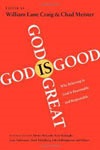
God Is Good, God Is Great: Why Believing in God Is Reasonable and Responsible
Edited by William Lane Craig & Chad Meister
InterVarsity Press, 2009
If your parishioners think about their faith, they will appreciate your taking the time to read God Is Good, God Is Great. This book, a compilation of essays by prominent Christian philosophers, was written in response to New Atheism. The New Atheists are a group of vocal secular philosophers whose creed—"No heaven, no hell, just science"—is increasingly heard in the television shows and Netflix movie choices that fill our parishioners homes in the evening and their minds the next day.
The problem with many philosophy books is they often speak about problems I have never heard of in words I do not understand. I am a preacher. I speak God's ancient words to contemporary people. My listeners come to church struggling with their jobs, kids, traffic and an evaporating 401K. If a philosophy book is going to help me, it's going to help average people who are trying to take God and his Bible seriously. Philosophy serves preachers well when it helps us understand why the worldview of the Scripture we are preaching is reasonable, and does so in concrete, non-technical terms that we can share with our congregations. Against this preacher's grid, God Is Good, God Is Great gets a grade from me of B+.
The book is divided into four topical sections: the existence of God, the greatness of God, the goodness of God, and why it matters. If you don't have time to read the entire book, read sections 1 and 3. I found the authors in these sections to be particularly understandable and relevant.
In chapter one, for example, William Lane Craig restates some of the traditional arguments for God's existence in simple, nontraditional ways. In the cosmological argument, for example, he states that since the universe is continually expanding it must be expanding away from a starting point. Using a simple cone diagram he explains that anything that is getting bigger and bigger "cannot be eternal in the past and must have an absolute beginning." This is a simple and compelling argument I can easily share with my congregation. Thanks, Dr. Craig!
J. P. Moreland writes an outstanding chapter on how the image of God (found in every person on the planet) undercuts the argument of scientific atheism. These atheists insist on a causal explanation for everything that happens in the universe. Moreland points out, however, that when the argument is applied to people; you end up proving the existence of the God you deny!
Think about it. People are conscious, have free will, rationality, a unified self, and intrinsic human rights. Since you cannot use these descriptors on anything else in creation, how is it reasonable to say that people spontaneously emerged out of the rest of creation? A far more reasonable explanation for the uniqueness of people is that God made people in his own image, as Moses says in Genesis 1 and 2.
Chad Meister does an outstanding job on the "problem of evil." Atheists argue, "If God is all powerful, all knowing, and perfectly good ... then how do you explain evil? The presence of evil proves that such a god does not exist." Dr. Meister responds creatively by showing that evil is a bigger problem for atheists than Christians.
Does objective evil exist? Why? What makes acts like rape and murder wrong? If people are, as atheist Richard Dawkins argues in his book Selfish Gene, just "survival machines—robot vehicles blindly programmed to preserve the selfish molecules known as genes" (p. 112), then how can anything selfish molecules do be wrong? As Meister point out, "If moral notions such as good and evil exist objectively, then there must be an objective foundation for their existence." The problem of evil is not solved through scientific naturalism. That approach makes the world much more evil.
Space constraints don't allow me to outline Alister McGrath's "Is Religion Evil?" Paul Copan's "Are Old Testament Laws Evil?" and Jerry L. Walls's "How Could God Create Hell?" but they are outstanding chapters that are well worth the read.
God Is Great, God Is Good is not a perfect book for the preacher. Some chapters were so abstract that they are difficult to understand. With others, I struggled because I had not read Richard Dawkins book, The God Delusion. At other places, the tone of the writers made me feel uncomfortable … like when your neighbors are fighting at night, and you can hear every word through your bedroom window. Their argument may be healthy, but I don't need to be part of it.
For preachers who want to be able to explain and demonstrate the validity of the biblical worldview, however, God Is Great, God Is Good is very helpful. Get it, read it, think, and help your congregation do the same.
Kent Edwards is professor of preaching and leadership, and director of the doctor of ministry program at Biola University in La Mirada, California, and author of Deep Preaching (B&H).

Follow Us